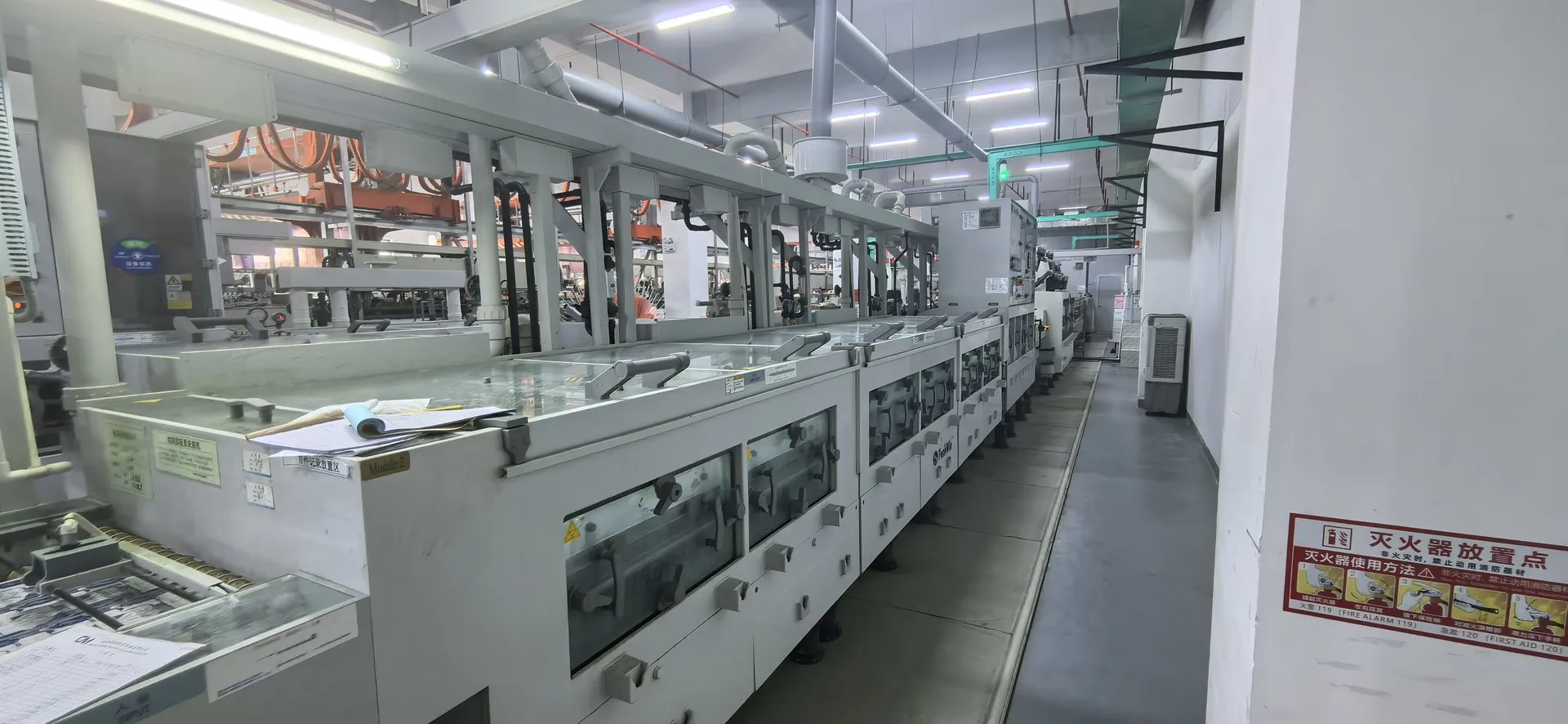

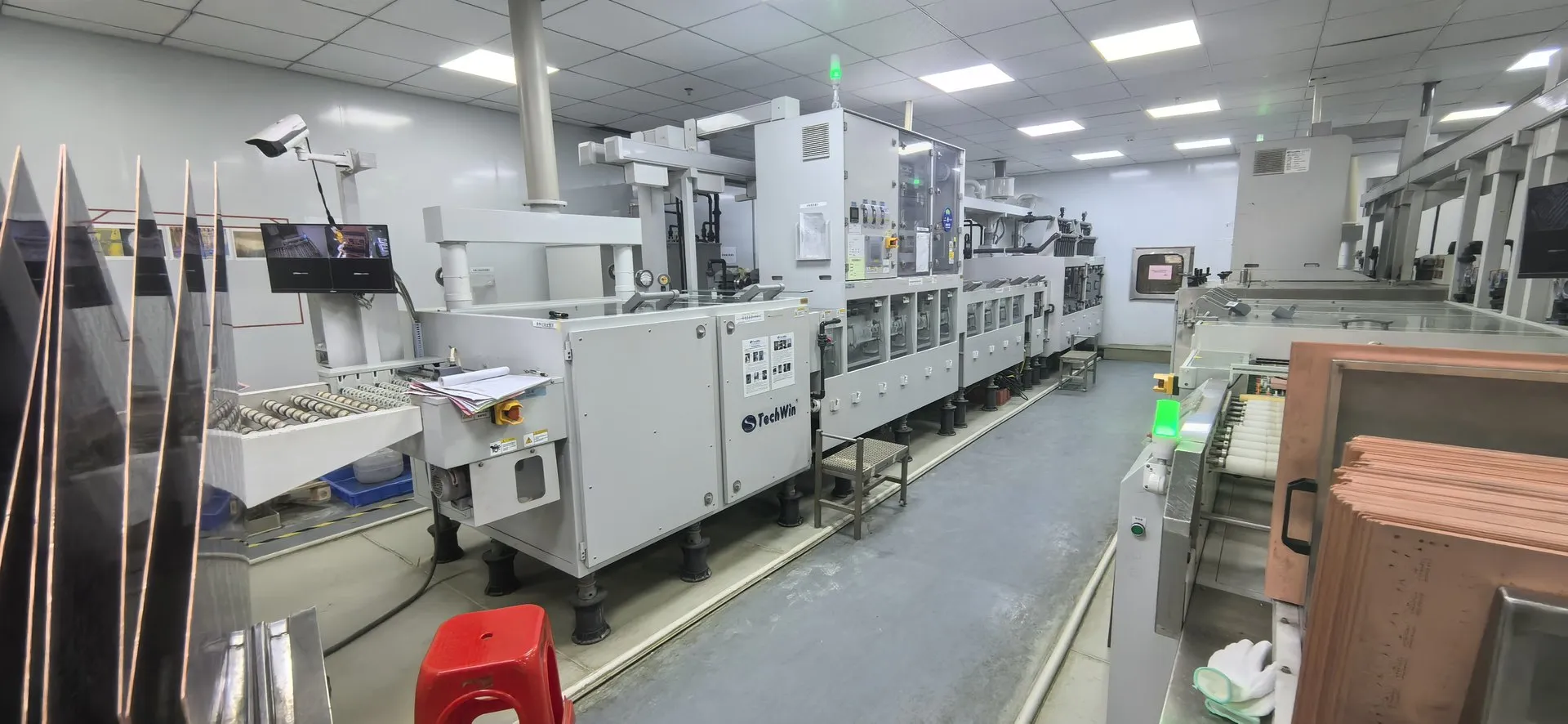
Flexible PCB (FPC)
Flexible printed circuits for moving parts, tight spaces and lightweight designs.
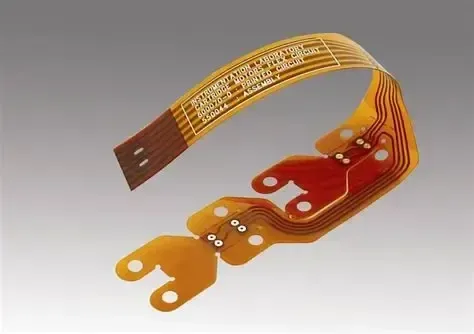
Flexible PCB (FPC) with ShinePCB
Flexible circuits bend and fold to fit where rigid boards cannot. We review material, coverlay, stiffeners and bend requirements with your drawing and confirm the construction for each project.
- Flexible material and copper choice
- Coverlay openings and stiffeners
- Static or dynamic bend requirements
- Connector and termination areas
Capability and certificates
| Positioning | Flexible Circuits | |
|---|---|---|
| Standard / prototype | Advanced / mass production | |
| Flexible PCB (FPC) | 12L | 16L |
Source: ShinePCB capability workbook, navigation overview. Values are confirmed against your files and the assigned facility during engineering review; certificates are available on request.
Flexible circuit capability
| Parameter | Prototype | Mass production |
|---|---|---|
| Layer count (max) | 12 | 16 |
| Min dielectric thickness | 12.5 µm | 12.5 µm |
| Min BGA pitch | 150 µm | 100 µm |
| Min board thickness | 50 µm | 50 µm |
| Max panel size | 610 × 1200 mm | 610 × 1200 mm |
| Base copper thickness | 9–35 µm | 6–35 µm |
| Min trace / space | 40 / 40 µm | 35 / 35 µm |
| Pattern registration tolerance | ±50 µm | ±20 µm |
| Min pattern-to-edge clearance | 0.10 mm | 0.07 mm |
| Etching tolerance | ±20 µm | ±15 µm |
| Min through-hole diameter | 0.10 mm | 0.075 mm |
| Min blind via diameter | 0.05 mm | 0.05 mm |
| Hole diameter tolerance | ±0.05 mm | ±0.05 mm |
| Impedance control tolerance | ±10% | ±5% |
| Outline tolerance | ±0.10 mm | ±0.05 mm |
| Surface finish | HASL, ENIG, immersion silver, OSP, ENEPIG, hard gold | HASL, ENIG, immersion silver, OSP, ENEPIG, hard gold |
| Stiffener type | FR-4, PI, stainless steel | FR-4, PI, stainless steel |
| Stiffener registration tolerance | ±0.20 mm | ±0.10 mm |
| HDI capability | 4-layer any-layer interconnect | 6-layer any-layer interconnect |
| LCP material | Supported | Supported |
Source: ShinePCB capability workbook (FPC sheet has no year column). Prototype and mass-production values are listed separately and are not interchangeable. Every value is confirmed against your files, the selected material and the assigned facility during engineering review.
Typical applications
Display and camera connections
Wearables and hand-held devices
Battery and sensor interconnects
From prototype to production
Every order follows the same controlled sequence. Prototype and production requirements are reviewed separately.
File review
Gerber or ODB++, drill data, drawing and quantities are checked for completeness.
Engineering questions
Open points on manufacturability, materials or special processes are sent before quotation.
Stack-up and material
Construction, laminate and finish are confirmed with you and written into the order.
Fabrication
The order is released to the facility whose process and qualification fit the requirements.
Inspection and test
Inspection and electrical test follow the methods agreed for your order.
Packing and delivery
Boards are packed and shipped under the confirmed delivery terms.
What to send for a PCB review
Start with the details you have — engineering will request anything else needed for the review.
Files and details for a PCB review
- Gerber (RS-274X) or ODB++ data with drill files
- Fabrication drawing with material, thickness and finish
- Stack-up and impedance targets, if any
- Quantity for prototype and for production
- Special requirements such as IPC class, testing or packaging
Technical files stay private
Customer Gerber, BOM and design data are managed under an ISO/IEC 27001 information security system and shared only within your project.
Flexible PCB (FPC) FAQs
What is the difference between static and dynamic flexing?
Static flex bends once during installation; dynamic flex moves repeatedly in use. Tell us which applies so the construction can be reviewed accordingly.
Can you add stiffeners?
Stiffener material and placement are reviewed per design and confirmed in the quotation.